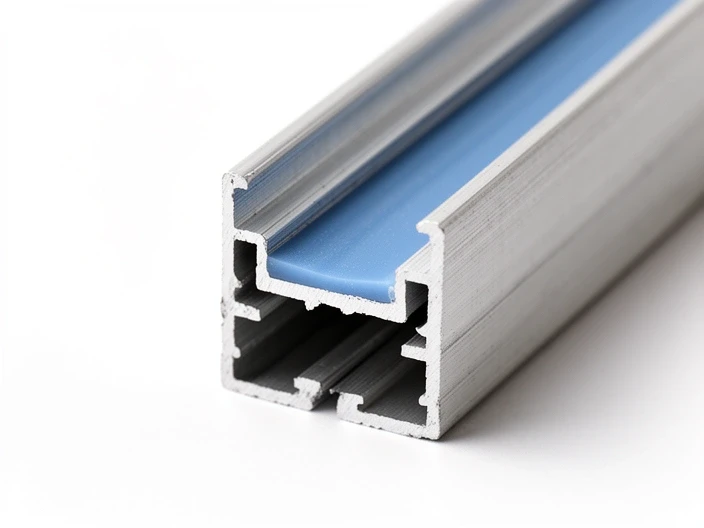
Thermal breaks: what the width means
Most window manufacturers mention thermal breaks in their spec sheets, but the actual width of the polyamide strip matters more than people think. The industry standard is around 24mm. We use a wider strip because the extra material improves insulation at the frame, which is where most heat escapes in a window system. Glass technology has improved quickly with triple-pane Low-E units, but the frame often hasn't kept pace. A narrow thermal break creates a weak point where cold transfers through the aluminum, and on cold mornings you can see it as condensation along the frame edge. Wider breaks push that cold bridge further from the interior surface. Going too wide starts to affect the profile's structural capacity, especially for large panoramic units that take real wind loads, so there's a practical limit. The sweet spot depends on the profile design and the loads it needs to handle.